Fertilizers, Baits and Antifreeze: The Garden Chemicals People Forget
Slug bait, rodent poison, flea drops for the dog and a small puddle under the car are more dangerous than any flower. Here is what should never be left unattended.
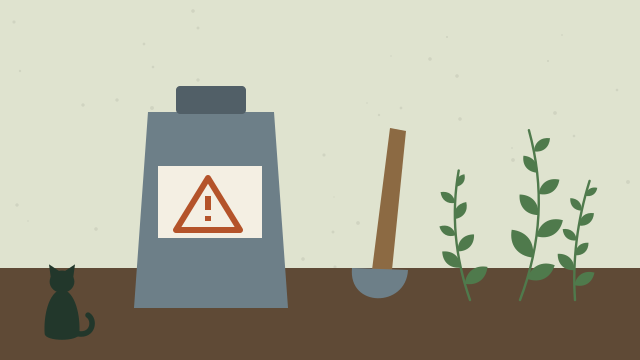
When people talk about a cat-safe garden, they think of plants. But the most serious poisonings are often caused by chemicals. A cat licks off everything that gets on its paws and coat, so even things it would never eat can be dangerous.
The most dangerous
Antifreeze
Ethylene glycol tastes sweet, and the minimum lethal dose for a cat is just 1.4 ml per kilogram, about a teaspoon of undiluted liquid. At first the cat looks almost drunk and vomits, then there may be a brief improvement, and 12–24 hours later kidney failure sets in. The outlook worsens very quickly, so go to the vet at once, without waiting for signs.
Wipe up drips in the garage and keep containers closed. Propylene glycol is less toxic, but it can cause a similar picture.
Permethrin
Permethrin is found in some flea products for dogs. It is highly toxic to cats: even a small amount can cause severe poisoning and death, with trembling, twitching, wobbliness and, in severe cases, seizures. Trouble happens when a cat is given dog drops or rubs against a freshly treated dog. If you use such a product on your dog, keep the animals apart for 72 hours. Never use dog products on a cat.
Rodent baits
Many rodenticides interfere with blood clotting, and bleeding usually appears after 3–7 days: loss of appetite, lethargy, weakness, pale gums, difficulty breathing. Other types work differently, for example on the nervous system. A cat can also be poisoned by eating a poisoned rodent. If you need protection from rats, use enclosed bait stations and mechanical traps that animals cannot reach.
Slug baits
Metaldehyde causes wobbliness, drooling, tremors, overheating and seizures. These baits are sold as granules and pellets, often colored. Use traps, hand-picking and barriers instead.
What else to keep locked away
- Fertilizers. Read the ingredients: blends may contain insecticides and other additives.
- Herbicides and fungicides. Keep your cat off a treated area until the product has dried or the time stated on the package has passed.
- Cocoa shell mulch. It contains the same substances as chocolate, and animal deaths have been reported. Bark or wood chips are a better choice.
- Essential oils. Cats are especially sensitive to them, and both contact with the coat and diffusers are dangerous. Tea tree oil causes the most poisonings. Do not use essential oils as a flea treatment.
- Paints, solvents, pool chemicals. Closed cabinets and no open cans.
Simple rules
- Read the label and look for a warning about animals.
- Keep your cat indoors while you apply a product, and keep it inside until the surface has dried.
- Store everything in its original packaging in a closed cabinet.
- Rinse your tools and pour out solutions where your cat does not go.
- If the coat is contaminated, call your vet right away and ask how to wash it off. Do not use solvents.