Why Lilies and Cats Don't Mix
The most dangerous plant for cats often ends up in the home by accident, in a gift bouquet. Here is why even pollen on the coat is enough.
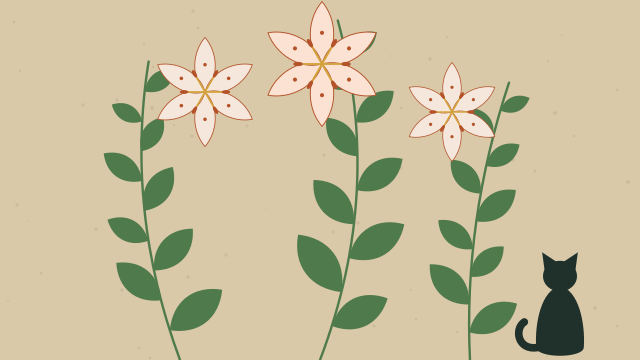
Among all the plants poisonous to cats, lilies are in a class of their own. Many toxic plants cause vomiting or diarrhea, but true lilies and daylilies can shut down the kidneys within days. Lilies do not cause kidney failure in dogs, so the advice "a friend's dog chewed on lilies and was fine" does not apply here.
Which plants are dangerous
Members of two genera are dangerous: lily (Lilium) and daylily (Hemerocallis). This includes Asiatic, Oriental, tiger, regal and Easter lilies, and all garden daylilies, including trendy large-flowered varieties.
Other plants with "lily" in their name act differently. Peace lily and calla lily contain calcium oxalate crystals: they irritate the mouth but do not cause kidney failure. Lily of the valley is not a true lily either, but it contains substances that disrupt the heart rhythm and is dangerous in its own right. Gloriosa, also called flame lily, is dangerous too: its roots can cause severe damage to many organs. The names get mixed up all the time, so go by the exact species.
Why so little is enough
The lily toxin has still not been identified, but its effect is well described: it damages the cells of the kidney tubules. The whole plant is dangerous: petals, leaves, stem, pollen and even the water from the vase.
The dangerous dose is very small. Fatal kidney failure can be caused by a small piece of leaf or petal, a sip of vase water or a few grains of pollen licked off the coat during grooming. Varieties sold as "pollen-free" are just as dangerous.
What it looks like
- In the first hours: lethargy, drooling, vomiting, loss of appetite. These can start as early as 1–3 hours, but sometimes later, within 12 hours.
- After 12–24 hours: signs of kidney damage, the cat urinates a lot and becomes dehydrated.
- After 24–72 hours, kidney failure develops. Without treatment the cat dies within a few days.
How to make your home safe
The only reliable protection is having no lilies in the house at all. A cabinet or high shelf will not help, because pollen and fallen petals scatter, and cats can jump much higher than you think.
- Ask people not to include lilies in bouquets they give you. Check ready-made bouquets when you receive them: lilies are often added to mixed arrangements.
- If a bouquet with lilies has already been brought in, take it outside and wipe down the surfaces. Cutting off the stamens does not help: the whole plant is dangerous, not just the pollen.
- In the garden, replace lilies and daylilies in areas where your cat goes. Roses, asters, zinnias or calendula are good choices.
- If pollen gets on the coat, call your vet right away and ask what to do before you arrive.