Windows and Balconies: Keeping Your Cat from Falling
A cat can easily slip off a windowsill, and a mosquito screen will not hold her. What to put on your windows and why tilt-open ventilation is more dangerous than it seems.
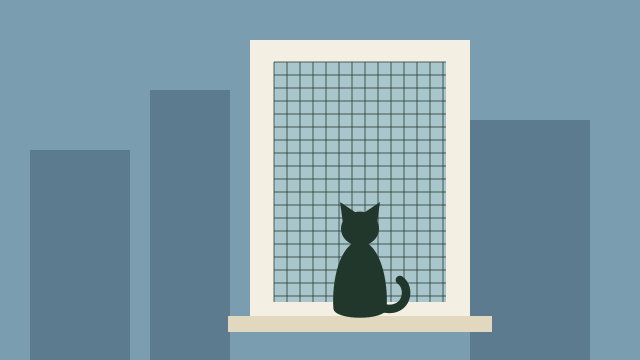
It is true that cats often land on their feet, but that does not mean falling is safe for them. Veterinarians are well acquainted with what is known as high-rise syndrome: fractures, especially of the jaw, dental injuries, and damage to internal organs, above all the lungs. Falls happen because a cat gets carried away chasing a bird, loses her balance, or leans on a screen.
An open window
The height of an apartment building is not the only danger. From lower floors a cat may run off, get scared, and get lost. A mosquito screen is designed to stop insects: the cat herself pushes it out of the frame and falls together with it.
What you need is a sturdy cat-proof barrier: a metal grille or mesh on a rigid frame, fastened to the window frame rather than to plastic clips. A good one does not pop outward when you press hard on it with your hand.
Tilt-open ventilation
A window that tilts open at the top is especially dangerous. The cat tries to squeeze through the gap, gets stuck in its narrow lower part, and hangs there, pinned at the belly and lower back. This can end in paralysis of the hind legs and damage to internal organs. Such windows can be protected with special side inserts and grilles; otherwise, you will have to give up the tilt setting when the cat is home alone.
The balcony
An open balcony is suitable only if it is fully glazed or has mesh from floor to ceiling. Railings and a narrow parapet are no barrier: a cat will jump up there just because, and one sudden noise is enough. Do not keep solvents or fertilizers on the balcony, and check planter boxes against the plant guide.